Research teams at the Resnick center are working on a range of high-potential catalytic problems in homogenous, heterogeneous and biocatalysis. We are bringing together leading researchers in interdisciplinary collaboration.
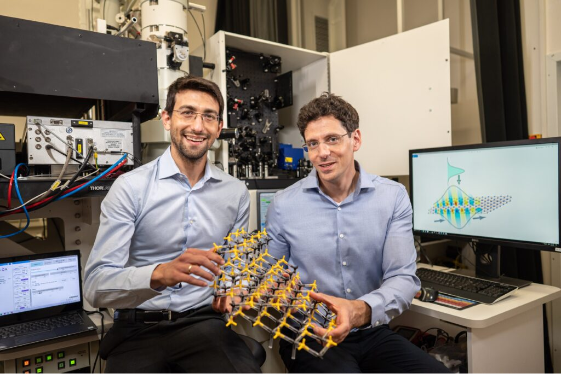
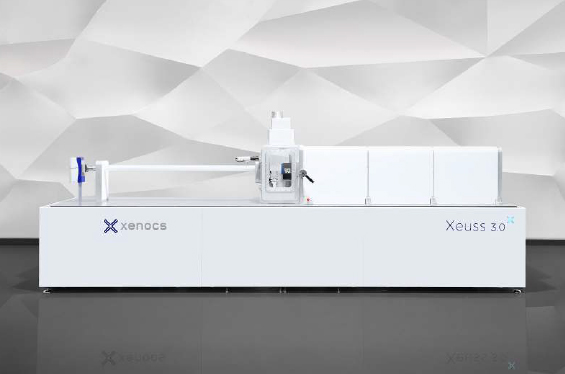
Technion Laboratory for Innovative X-ray Science
Our research deepens our understanding of quantum science. This can drastically advance catalysis, particularly by exploring quantum mechanical phenomena at ultrafast timescales, such as fem to seconds. Such rapid processes in catalytic systems have in many cases never been fully measured and hold immense potential for developing more efficient and selective catalysts. Understanding these details can lead to groundbreaking improvements in energy conversion and chemical manufacturing.
Operando Reaction Characterization
Imagine being able to watch a chemical reaction as it happens, like watching a live sports event. That’s what operando equipment allows scientists to do. By observing reactions in real-time, researchers can understand how catalysts work during the process, not just before and after. This live analysis can lead to the creation of cleaner fuels, eco-friendly chemicals, and improved products like plastics and medicines, making our everyday lives more sustainable and efficient.
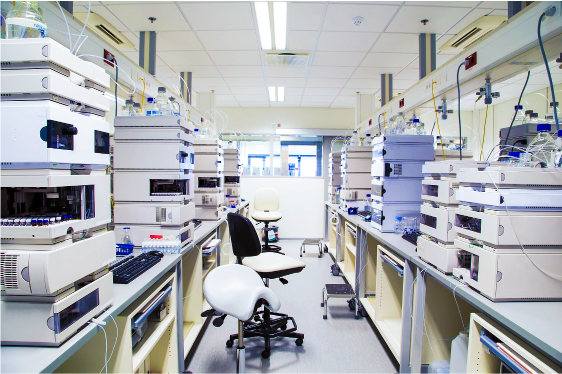
Analytical Equipment Lab
Analytical equipment is like a detective’s toolkit for scientists, helping them investigate and understand chemical reactions in detail. By precisely analyzing these reactions, researchers can find ways to reduce waste, save energy, and create environmentally friendly materials. This work helps industries become greener and more efficient, leading to a healthier planet and a brighter future for everyone.
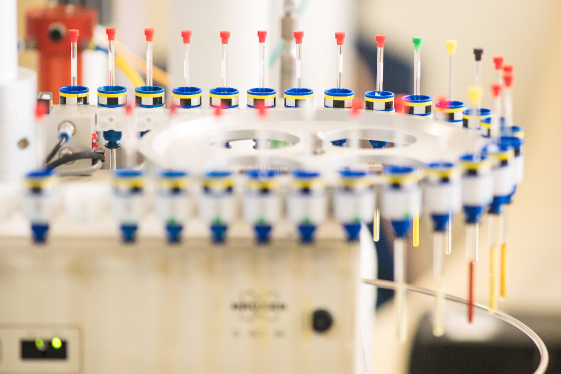
Modular Integrated Automated Catalyst Discovery
This equipment is like a high-speed matchmaker for chemicals, quickly finding the best catalysts for eco-friendly industrial processes. These catalysts can help make cleaner fuels, cut down on harmful emissions, and develop biodegradable plastics. By speeding up the discovery of effective catalysts, this research supports the creation of greener technologies that benefit both the environment and our daily lives.
Biological Catalysis Lab
Biological catalysts, like enzymes, are nature’s own tools for speeding up chemical reactions. This equipment helps scientists harness these natural catalysts to make industrial processes greener. For example, enzymes can be used to produce biofuels, break down pollutants, and manufacture medicines more efficiently. By leveraging the power of nature, researchers can develop technologies that reduce environmental impact and promote a healthier ecosystem.
Biological catalysts, like enzymes, are nature’s own tools for speeding up chemical reactions. This equipment helps scientists harness these natural catalysts to make industrial processes greener. For example, enzymes can be used to produce biofuels, break down pollutants, and manufacture medicines more efficiently. By leveraging the power of nature, researchers can develop technologies that reduce environmental impact and promote a healthier ecosystem.
VR into Chemistry and Catalysis
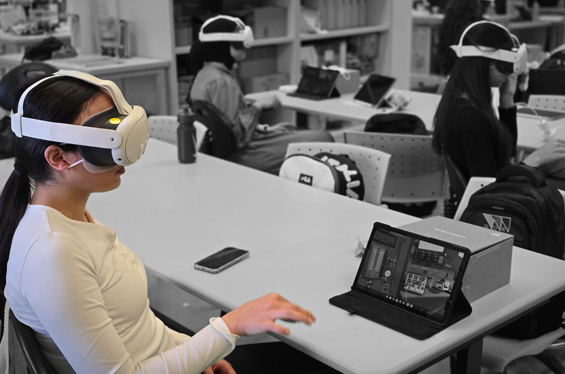
The integration of VR into chemistry and catalysis education can provide an immersive learning environment where students can interact with three-dimensional molecular models, simulate experiments, and observe chemical reactions at a microscopic level without the associated risks of a physical laboratory. We just finished designing the first UG teaching lab, completely in VR, and the first cohort of students took it this Spring semester of 2025. We are conducting a study on the effectiveness of this new approach and have already began designing the second VR teaching lab for students on catalysis.x